
Gilmer County VINE Coverage
West Virginia VINE has covered the whole state since December 2002. In 2019 the network grew to all ten regional jails. Gilmer County is one of the places Central Regional Jail expressly serves. So a Gilmer detainee joins the statewide VINE path. That path begins the moment the regional system admits them. There is no separate Gilmer SAVIN brand or county-only VINE service.
The West Virginia DCR VINE page lists the branded phone route. The route is 1-866-WV4-VINE. It also links out to VINELink. Custody information is available around the clock. Status access is free and anonymous, with notifications by app, phone, email, or text, according to the state. That makes VINE a tool for following one known person. It won't browse every Gilmer booking. The state expansion announcement documents regional-jail coverage.
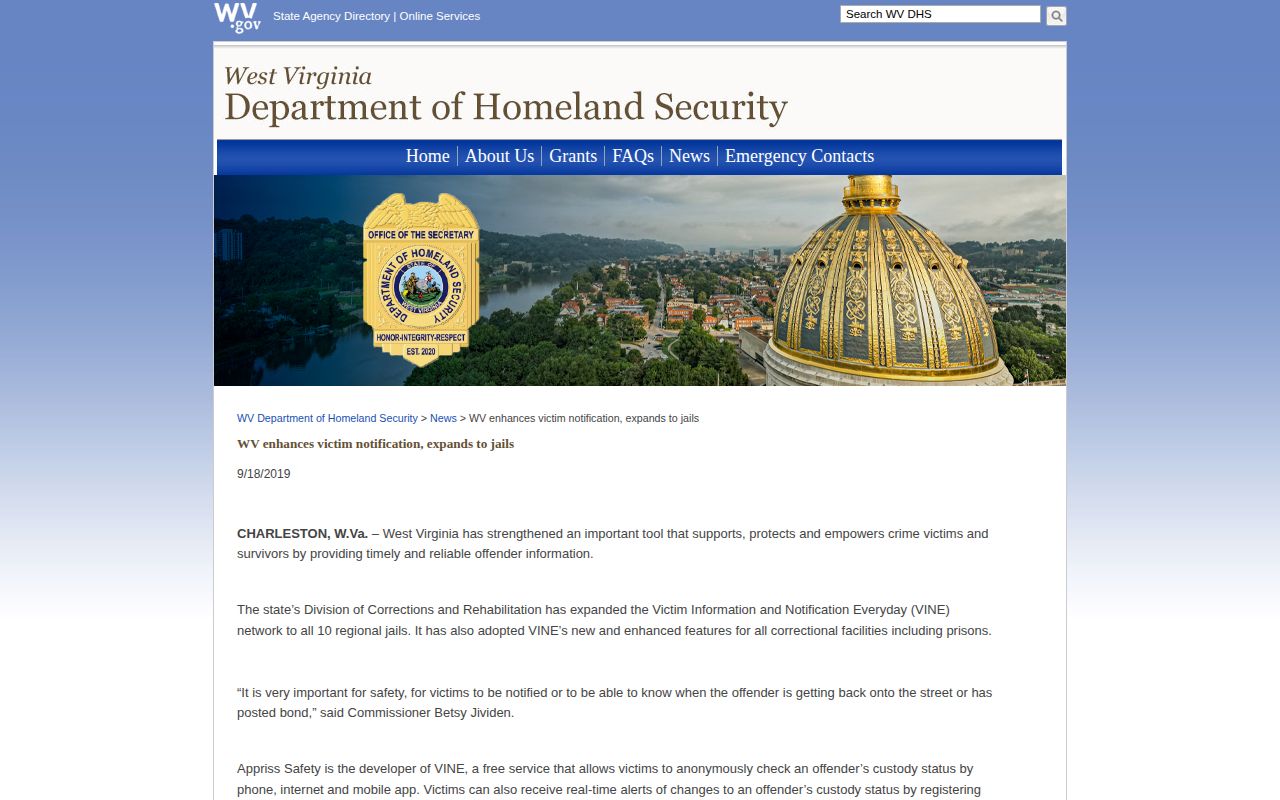
The state pages show how a county with no jail or app of its own still takes part in the network.
Check a Gilmer Arrest on VINELink
VINELink is a live application. Menus and field labels shift. So start at the official home screen, pick West Virginia, and follow the prompts the site gives you. Enter enough identity detail to separate people who share a name. Never publish a registrant's details, and don't assume the first similar result is your person.
- Open VINELink and choose West Virginia.
- Select the custody or person-search function shown by the application.
- Enter the name and any available identifier requested by the current form.
- Compare all displayed identifying facts and the listed facility.
- Open the correct record and read its custody status and update information.
- Call Central Regional Jail when an urgent release or transfer needs direct confirmation.
An arrest in Gilmer does not show up instantly. The arrest, the drive to Sutton, and intake at the jail all come first. Someone cited and released may never enter the regional system. Juvenile matters sit outside this local path too. So do federal and immigration custody. The VINELink state-selection screen starts the Gilmer County check.
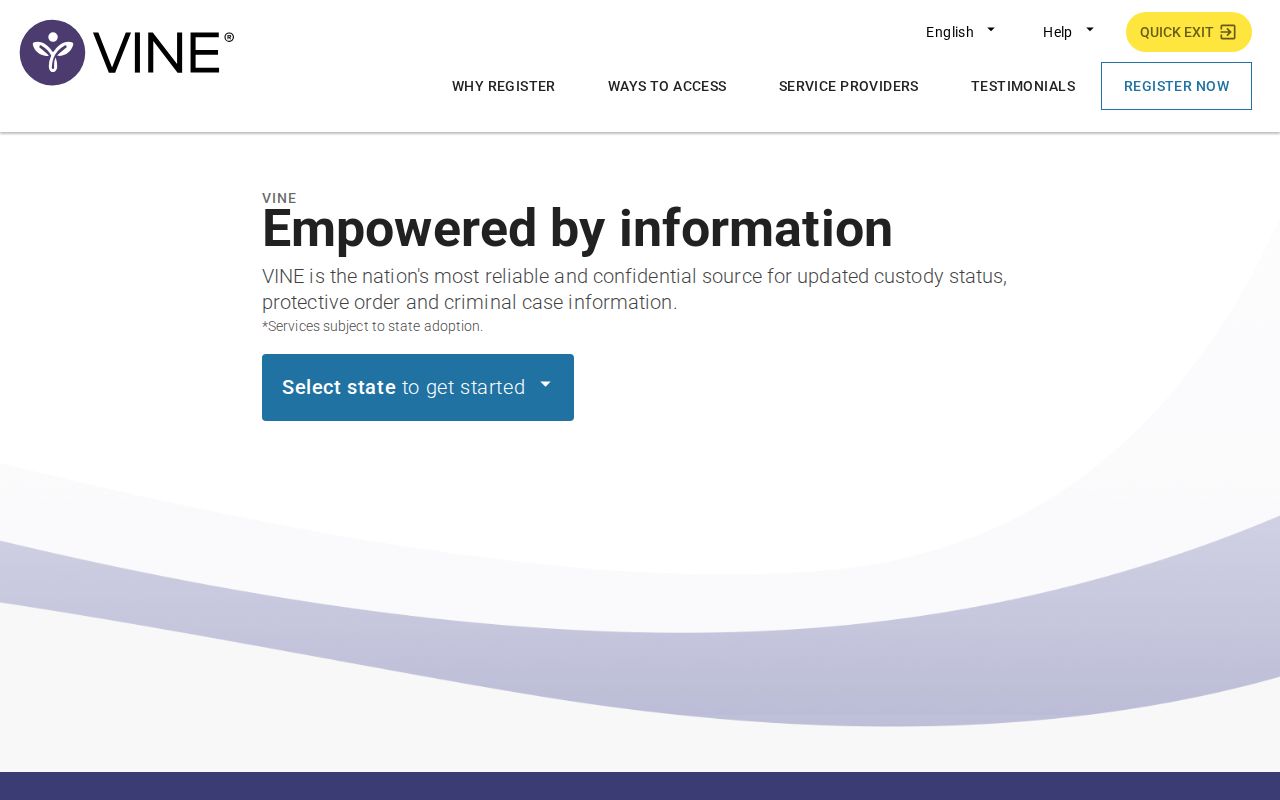
The VINELink home screen is the official entry point, not a public gallery of Gilmer booking photos.
What Gilmer VINELink Shows
VINE reports custody state and sends notifications. That is its whole job. It is not a criminal-history report. Nor is it a court docket, warrant database, or booking-photo source. Exact result fields depend on the live app and the state feed. Read what the current result gives you. Verify anything critical by phone.
| Result item | Meaning and limit |
|---|---|
| Name or identifier | Helps distinguish the intended custody record |
| Custody status | Reported state in the VINE feed, subject to update delay |
| Facility | Listed location, which may change during transfer |
| Agency | Participating corrections source, not necessarily arresting agency |
| Notification option | Registration path where the record and event support it |
| Update information | System timing that is not a guarantee of real-time status |
The court file tells a different story than the custody record. To follow the case, use the West Virginia Magistrate Record Search. The Gilmer clerk is the other stop there. Charges can change as the case moves. A blank VINE result, likewise, does not prove no arrest happened at all.
Register for Gilmer Custody Alerts
Once the right record is on screen, choose the registration option the live app offers. West Virginia sends alerts by phone, email, text, or app. What is available depends on the event. The current interface plays a part too. Use only a contact method you control. Keep any PIN or confirmation private.
- Confirm that the displayed person and Central Regional Jail record match.
- Choose the available release, transfer, or custody-change notification.
- Select phone, text, email, or app delivery where offered.
- Provide the required contact information and create or record any PIN.
- Complete the confirmation step shown by VINELink.
- Save the registration details privately and update them if the contact method changes.
The VINELink registration route illustrates the current workflow.
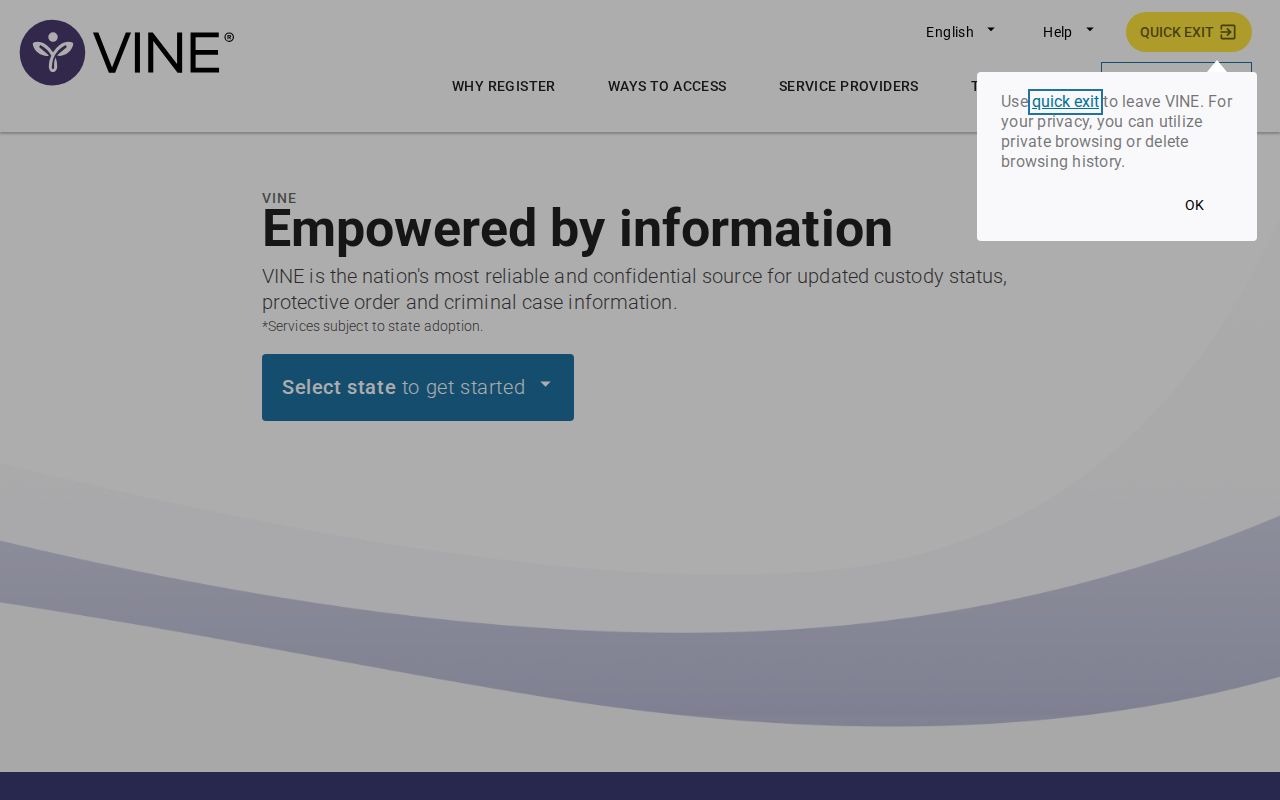
The screen allows private alert enrollment. It must never be used to expose a registrant's phone, email, or PIN.
Gilmer Transfer Alert Gaps
DCR warns that a movement notice may not fire. The person may already have arrived at the new facility. Someone can leave Central Regional Jail hours before the receiving institution finishes its entry. An apparent gap opens up. Do not read the delay as a release, an escape, or a disappearance. Check the DCR jail or prison locator. Call the facility when timing matters. The DCR VINE page explains its phone service and movement caveat.
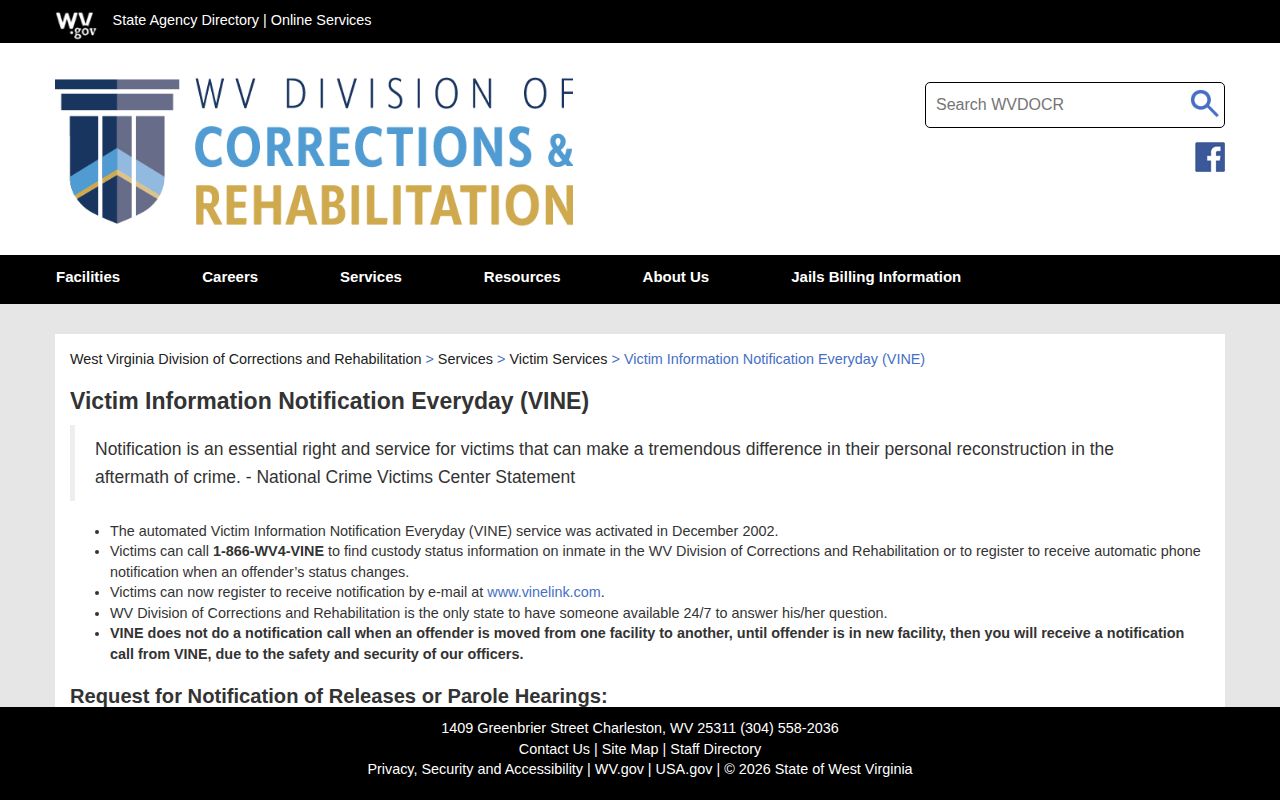
The official guidance shows that alert timing follows custody-system movement, not the moment a transport leaves.
A delayed transfer alert does not mean release. Verify the current institution through DCR or the jail.
Written Gilmer Custody Notices
West Virginia also keeps a written-request route. A person wanting release or parole notice may write to DCR and, separately, to the West Virginia Parole Board under §62-12-23d. A written DCR request enrolls you in VINE automatically. It does not cover Parole Board notices; that request stands alone. Online enrollment never replaces every statutory written notice.
The distinction matters when a case moves from pretrial regional custody to a sentenced prison term and later parole review. The jail listing, the VINE event, the DCR prison record, and the parole notice each mark a different stage. Keep the confirmation from each registration. One alert does not watch the whole case.
Limits of Gilmer VINELink Checks
VINELink has real limits for Gilmer County arrest checks. It is not a live detector. Someone can be arrested and booked at Central Regional Jail. The system may not post the record until later. VINE also keeps no booking photos and shows no court outcome. Federal custody is out of scope too. The BOP locator handles federal inmates, and the ICE detainee locator covers immigration holds.
A fresh Gilmer arrest may not appear right away. Check DCR Daily Incarcerations first for Central Regional Jail. Then call 304-765-7904. A custody hit with an unclear case calls for West Virginia court access. The Gilmer magistrate clerk can help at 304-354-6698. For an arrest or incident report itself, the sheriff's line is 304-354-6333.
Note: Treat every status entry with care, since an old notification can lag behind later changes in a case.
Gilmer VINE Versus Other Sources
Each source answers a different question. Daily Incarcerations shows whether the holding jail lists current admissions. The DCR jail search checks present or recent regional custody by name. VINELink does something else: it tracks one known person and registers alerts. The magistrate and circuit systems carry the procedural case. Local news adds color without being a custody authority. Match the source to the question. That habit avoids a common mistake, which is treating a booking, a custody status, and a conviction as one single fact.
| Question | Best source |
|---|---|
| Was a person just admitted? | DCR Daily Incarcerations |
| Is the person listed in regional custody? | DCR jail offender search |
| Can I receive release or transfer alerts? | West Virginia VINE and VINELink |
| How did the charge end? | Magistrate or circuit court record |
| Is the person in federal custody? | BOP Inmate Locator |
Keep Gilmer Alerts Current
Small things break big alerts. A changed phone number, a blocked text, a full email inbox, or a forgotten PIN can all silence notice. This happens even while the custody feed runs fine. Save the West Virginia VINE number and the Central Regional Jail contact in separate places. Review your delivery method after any contact change. That gives you a direct confirmation path when an automated message is unclear. It also helps when notice arrives after a transfer, or never reaches the registered device at all.
Registration stays private. Never share a victim's phone number, email, password, or PIN. Keep them out of any public request or social post. VINELink supplies the notice tools. DCR and the courts remain the sources for custody facts and case documents.
Public Record Search
Sponsored Results